Watercolor Roses Clipart for Crafts Projects
As a graphic designer with years of experience in branding, packaging, and digital design, I’ve come across countless design assets. Watercolor Roses Clipart stands out as a versatile and visually appealing option that can elevate a wide range of creative projects. Whether you're working on a handmade business, a seasonal campaign, or a print-on-demand product line, this clipart offers a soft, artistic touch that can enhance the overall aesthetic of your work.
The First Impression: Soft, Elegant, and Timeless
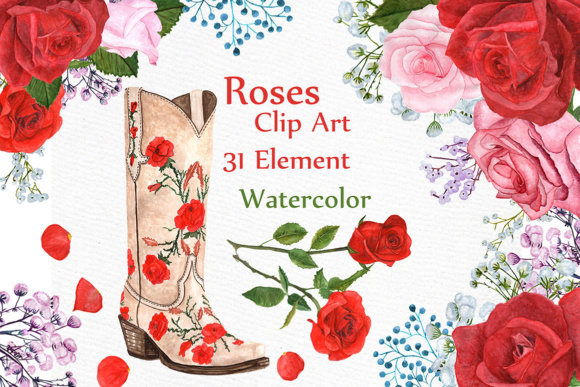
Watercolor Roses Clipart immediately evokes a sense of warmth and sophistication. The delicate brushstrokes and pastel tones create a gentle, romantic mood that feels both modern and nostalgic. This style is ideal for brands that want to convey a sense of care, artistry, and authenticity. It’s perfect for small businesses, Etsy shops, or boutique product lines looking to add a handcrafted feel to their visuals.
The roses are rendered with a subtle texture that adds depth without overwhelming the design. This makes them suitable for a variety of applications, from simple logos to intricate packaging details. The softness of the illustration also allows it to blend well with different color schemes and typography styles, making it a flexible choice for designers.
Real-World Applications: From Branding to Print-On-Demand
In real design situations, Watercolor Roses Clipart proves to be a valuable graphic design asset. For logo design, it can serve as a decorative element that complements a more minimalistic typeface. In brand identity projects, it can be used as a recurring motif to reinforce visual consistency across marketing materials, social media graphics, and packaging design.
This clipart is especially useful in product labels, packaging design, and t-shirt design. Its soft, flowing lines make it ideal for sublimation design, sticker design, and printable designs that require a handcrafted look. It also works well in Canva templates and Cricut projects, where users need high-quality illustrations that can be easily customized.
For digital sellers and print-on-demand creators, Watercolor Roses Clipart can be a key component of a design bundle. It can be used to create wall art, greeting cards, and stationery that appeal to customers looking for unique, artistic prints. Its versatility also makes it a great fit for editorial design, blog visuals, and Pinterest pins that aim to capture attention with a soft, elegant aesthetic.
Where It Shines: Large Layouts and Themed Campaigns
Watercolor Roses Clipart excels in large layout areas such as hero graphics, product mockups, and campaign visuals. When used as a background or focal point, it adds a sense of sophistication and creativity that can make a design stand out. It’s particularly effective in themed collections, where a cohesive visual language is essential for maintaining brand recognition.
It also works well as a decorative accent in packaging design, invitations, and flyers. Its organic shape and soft edges allow it to blend seamlessly into various design elements without clashing. For commercial design projects, it can be used to support brand elements like logos, headers, and promotional banners, adding an extra layer of visual interest.
Where to Use It Carefully: Minimalist and Corporate Projects
While Watercolor Roses Clipart is beautiful, it may not be the best choice for minimalist branding or professional corporate materials. In these cases, the soft, flowing lines could interfere with visual hierarchy and readability. If the design requires a clean, structured look, a more geometric or bold illustration might be more appropriate.
Additionally, when placed on complex backgrounds or in crowded layouts, the clipart can become lost or distracting. It’s important to test it at different sizes and on various backgrounds to ensure it maintains its impact without overwhelming the composition. For low-contrast designs, consider adjusting the opacity or using a solid color overlay to improve visibility.
Design Considerations: Testing and Licensing
Before using Watercolor Roses Clipart for a client project, there are several practical steps every designer should take. First, test it in black and white to see how it holds up without color. Check contrast on light and dark backgrounds to ensure it remains visible and readable. Preview it at small and large sizes to confirm it scales well without losing detail.
Place it on real mockups to see how it interacts with other design elements. Test print quality if it will be used for physical products, and review file formats to ensure compatibility with your workflow. If it includes PNG transparency, check that the background is clean and free of artifacts. For SVG design files, verify that they are editable and scalable without loss of quality.
Compare it with different font styles—serif, sans serif, script, and display fonts—to find the best typographic pairing. Finally, always confirm the commercial license before using it for a client or business project. A proper license ensures that you can use the asset without legal issues, especially when selling digital products or print-on-demand items.
Conclusion: A Thoughtful Addition to Your Design Toolkit
Watercolor Roses Clipart is a thoughtful and versatile design asset that can bring a unique artistic flair to a wide range of projects. Whether you're working on a handmade business, a seasonal campaign, or a digital product, it offers a soft, elegant look that can enhance the visual mood and professionalism of your work.
By understanding its strengths and limitations, you can make informed decisions about where and how to use it. With careful testing and consideration, Watercolor Roses Clipart can become a valuable part of your creative marketplace offerings, helping you deliver polished, engaging designs that resonate with your audience.